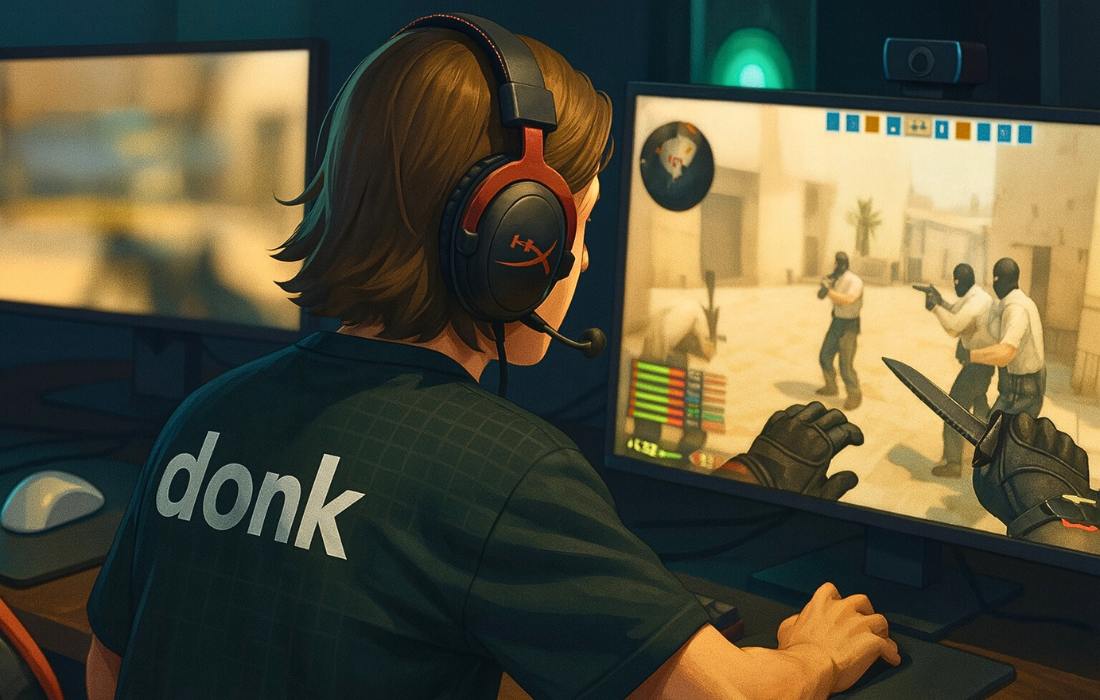
donk has the best aim toolkit
When pro players are asked who has the best raw aim in CS2, most of them name donk without hesitation.
Thanks to Daniel Kapadia, the well-known aim expert and esports commentator, we now have a clear breakdown that gives deep insight into how donk’s aim actually works, and why even the best players struggle to fight him.
You might think that donk hardly misses any shots – but the truth is, he does. What sets him apart from most players is the consistency and depth of his aim mechanics — a toolkit most players haven’t fully developed.
Let’s take a look at some of those tools.
Spray and recoil control
donk is known for having incredible aim and recoil control. This section breaks down how he stays accurate through flicks, sprays, and movement.
Staying in control after the flick
donk’s flicks are clean and direct. Instead of dragging the crosshair in a curved line, he’s very good at moving it in a straight line to the target. This gives him more time to stabilize and make microadjustments if needed.
When donk misses the first bullet, he doesn’t panic. Instead, he instantly switches into a controlled spray and makes small, precise corrections using his wrist and fingers.
Using movement with spray control
donk often chooses to crouch, slide, and spray at the same time, even though it’s a long distance. He does this because it makes him harder to kill while maximising his chances to hit the enemy. Daniel calls it a total game-changer to combine great recoil control with movement.
Choosing the right shooting style
donk also sprays to deal with potential trade fraggers, and he adjusts his shooting to bursts or taps depending on the situation. It’s about knowing the right shooting style for the job.
Mouse grip and tension
donk keeps his mouse grip relaxed. A low tension allows him to have smoother aim corrections and better spray control. Instead of fighting the mouse, he lets it move naturally.
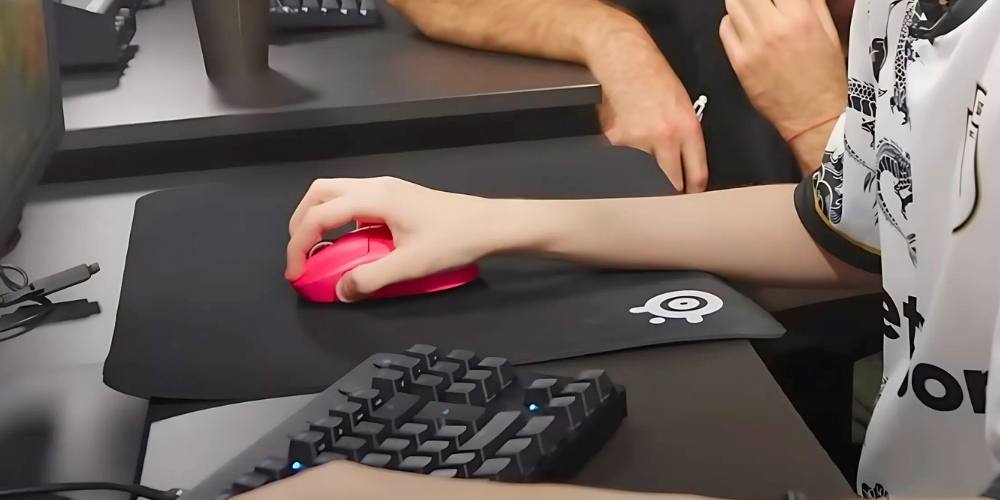
One of the key differences in donk’s grip compared to other players is that he uses a claw grip where his fingers are noticeably curved compared to players using af palm grip. This way, his hand sits higher on the mouse and gives him much greater access to finger-based control.
Instead of relying solely on arm or wrist movement, donk can better use his fingers for precise micro-adjustments and spray control. Palm grip players, whose fingers typically rest flat against the mouse, don’t have the same level of fine control.
Tension management
Everyone can train tension management, but the claw grip donk uses make it a little easier. When we face a stressful situation in-game, it’s often the fingers that tense up the most, which makes controlling the mouse movements harder.
Reactive vs. Predictive Aiming
Another key part of donk’s aim is that he reacts to what’s happening in the moment, instead of guessing what the enemy will do. A lot of players rely on what’s called predictive aiming — they aim where they think the opponent will go. This can work, but it often leads to missed shots when the enemy does something unexpected. You often see this in pistol rounds where you’re just spamming and constantly flicking behind the enemy.
Avoid early commitment
donk doesn’t commit early. He keeps his crosshair ready and waits to see real movement before he fires. This style is called reactive aiming, and it gives him more controlIt’s especially useful when an enemy player quickly changes direction, because it lets him adjust his aim instead of having to recover from a wrong guess.
Most aim mistakes come from predicting too much and reacting too little. If you often flick slightly behind your target, you’re probably aiming predictively. donk avoids this by trusting his reactions instead of trying to guess. It’s a simple shift, but it makes a big difference.
Practical aim tips to train like donk
Based on everything we’ve covered so far, here are some practical tips to help you train the key mechanics behind donk’s aim.
Release tension after flick shots
After performing a flick shot, try to relax your grip slightly as soon as your crosshair hits the target. Letting go of tension makes it easier to stay accu and ready for a micro-adjustment if needed. Focus on making the initial flick fast and snappy, then ease the tension to stay in control and prepare for any follow-up movement.
Use arm flicks and mouse lifts to stay in control
If you struggle to correct your aim after af missed shot, it’s often because your mouse tension is still too high, or your wrist isn’t in a neutral or stable position. To fix this, try doing large flicks mostly with your arm instead of your wrist. This gives you more control and helps reduce unwanted tension.
One technique donk uses is mouse lifting. By lifting and resetting the mouse, he keeps it centered on the mousepad and avoids running out of space. This is especially helpful when you’re repositioning your crosshair and don’t know exactly where the next enemy will appear.
Learn to aim reactively, not predictively
A lot of players get stuck in a predictive mindset — they aim where they think the enemy will go, instead of reacting to what’s actually happening. Reactive aiming is about reading the enemy movement in real time and adjusting your crosshair based on what you see, not what you expect the player will do.
To train this, try using an aim trainer with tracking scenarios that don’t give you any visual cues. Since the targets move unpredictably, you’re forced to react on instinct. Over time, this helps you develop a feel for reactive aim — something you can bring directly into your competitive matches.
Use deathmatch to correct your aim
Deathmatch is a great tool for implementing changes to your mechanics because your focus is purely on aim, something that’s hard to isolate when you’re playing a match. In a real game, you’re also dealing with decision-making, positioning, and team play, which makes it harder to work on specific technical habits.
If you have a lot of fundamentals to fix, you’ll likely need to spend consistent time in deathmatch, workshop maps, and aim trainers. Here, you can take your time to break bad habits, reinforce good ones, and gradually make those changes stick.
Don’t overdo aim training
Daniel always advises to cycle aim training, like lifting weights in the gym. Have some weeks where you do significantly less aim training, but focus on other things to give yourself a break. Not only does this give you a chance to give your brain a rest, but it also removes a lot of the monotony from the grind, which helps keep things fun and engaging.
If you become overly focused on your aim, you may try to solve situations in a match with aim when you should be using better utility, decision making, team play, or timing instead.