In the world of Counter-Strike, performance is everything, but that doesn’t stop players from investing heavily in gear, cosmetics, and everything in between. From $500 knives to $150 keyboards, CS players have developed a reputation for spending big where it matters – and sometimes where it absolutely doesn’t.
So what exactly are CS players spending their money on? And how does that spending extend beyond the game itself?
Skins: Vanity with Value
Ask any veteran CS player, and they’ll tell you: skins don’t make you better, but they sure make you feel better. The in-game economy of skins, stickers, and gloves has become its own ecosystem. Rare finishes like a factory-new Karambit Doppler or an AWP | Dragon Lore can fetch prices higher than actual gaming PCs.
These digital items aren’t just eye candy. For many, they’re long-term investments—one part flex, one part portfolio. It’s no surprise that sites dedicated to skin trading, case unboxing, and price tracking have flourished alongside CS itself.
Even players who aren’t interested in trading still find themselves opening cases or upgrading to skins that “just feel right.” Whether it’s psychological or placebo, a nice skin somehow makes every headshot more satisfying.
Gear: Real-World Performance Boosts
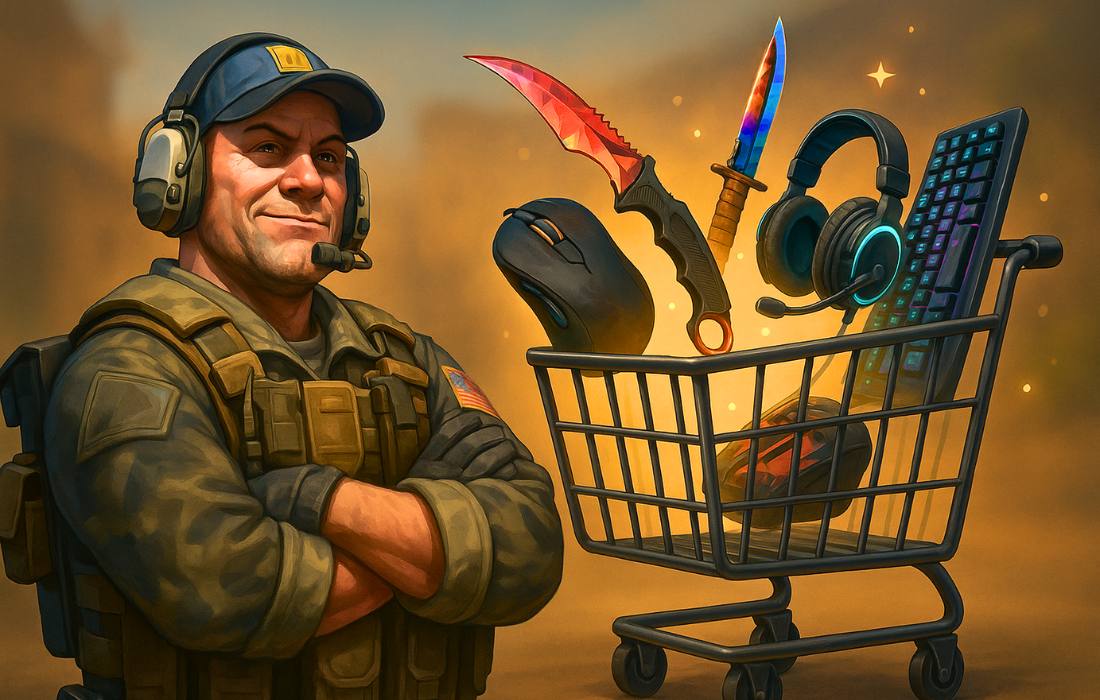
For the performance-focused crowd, hardware upgrades take priority. Precision aiming in CS depends on mouse sensors, refresh rates, and input latency. Top players regularly invest in 144Hz+ monitors, lightweight mice, low-profile keyboards, and mousepads that feel like the smooth side of the moon.
It’s not uncommon to see players replace a mouse after a few hundred hours – or to test multiple grip styles just to shave milliseconds off reaction time. The gear arms race never ends, and for many CS players, the phrase “it’s not the gear, it’s the player” is only true up to a point. After that, it’s just an excuse to buy a better mouse.
Sound is another overlooked category. CS players obsess over positional audio, and high-quality headsets with pinpoint directional accuracy can mean the difference between clutching a round or walking blindly into a prefire.
Utility Spending: Boosting the Whole Setup
Beyond the core gaming gear, players also invest in software, training tools, aim trainers, and even ergonomic chairs to survive long sessions. Subscription services like Aim Lab Pro, video editing tools for frag montages, or coaching sessions all fall under what many players now consider part of their broader “CS budget.”
With the rise of online marketplaces, players spread their gaming spend across multiple titles and ecosystems. For example, while CS itself doesn’t accept external wallet systems, many players who also play Valorant, PUBG, or Warface will use a Razer Gold card to pick up premium content or currency in those games.
Digital marketplaces like Eneba often offer deals on prepaid cards, letting players stock up for non-Steam titles without committing to a single platform. Grabbing something like a Razer Gold card on Eneba is a popular move for players juggling multiple games, especially when you’re away from CS and want to keep honing your aim on mobile or Steam Deck.
The Culture of Spending
At its core, Counter-Strike remains a highly competitive, performance-first game. But even in that space, there’s room for personal expression, gear obsession, and yes, the occasional spending spree.
Whether you’re buying a skin because it matches your team colors or upgrading your keyboard because the old one flew out the window, the habit of investing in your playstyle is part of what makes CS culture unique.