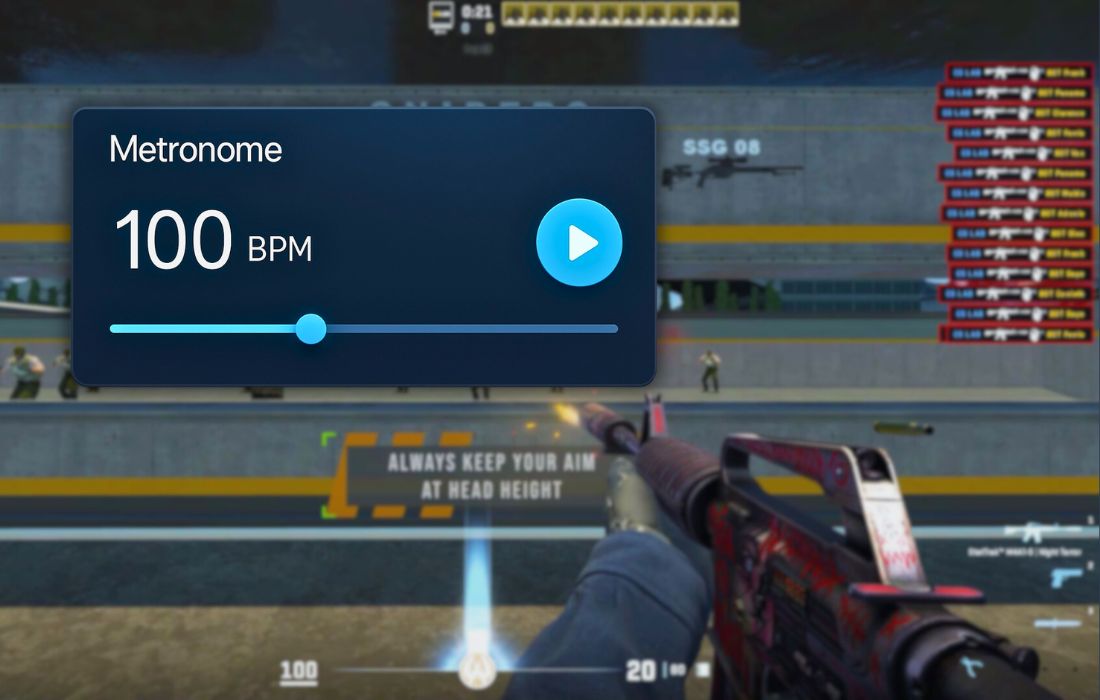
It’s a debate as old as voice chat toxicity: which FPS requires more skill – Counter-Strike or Call of Duty? Both franchises have dominated the competitive shooter space for decades, each with its own philosophy on what skill actually means. But underneath the crosshairs and killcams lie two fundamentally different interpretations of mastery.
Counter-Strike is an exercise in discipline. A game where split-second aim, pixel-perfect positioning, and encyclopedic map knowledge create a brutally level playing field. Weapons have spray patterns, movement has momentum, and the tiniest mistake – peeking an angle at the wrong time, mismanaging economy, failing to check a corner – can mean instant elimination. It’s chess with assault rifles.
Call of Duty, on the other hand, is speed. It’s about fast reflexes, aggressive momentum, and dynamic map control. Mechanics like aim assist, sprint-to-fire speed, and killstreaks tilt the balance toward tempo and pressure. You react, you adapt, and you keep moving. Strategy exists, but it’s packaged in a quicker, more reactive loop, designed for players who treat every match like controlled chaos.
Skill, Redefined
So which demands more skill? The answer depends on how you define the word.
If “skill” means mechanical precision, deliberate strategy, and a slow-burn mental game, Counter-Strike wins by miles. If “skill” means reactive awareness, twitch reflexes, and mastering the meta at speed, Call of Duty holds its ground. They’re different ecosystems, asking players to adapt in different ways.
Interestingly, despite their opposing design philosophies, both games have cultivated massive followings and competitive scenes. And whether you’re practicing your spray control in CS2 or optimizing your loadout in Black Ops 6, the common thread is repetition, refinement, and muscle memory. Different tools, same process.
The Platform Doesn’t Care – But You Might
While Counter-Strike thrives on PC and Call of Duty has found deep roots on console, player skill is platform-agnostic. Many console players still hone their reflexes in the same brutal grind, aided by the tools their hardware provides – including precision-tuned controllers, customized setups, and high-refresh-rate displays. And for those fueling their console arsenals, tools like a digital Xbox gift card remain a flexible way to gear up, whether for cosmetics, battle passes, map packs, or even the occasional controller replacement after a particularly suspect sniper kill that defies both physics and your sense of inner peace.
Skill Progression in Practice
What’s often overlooked in the Counter-Strike vs. Call of Duty debate is how each game teaches skill. Counter-Strike offers a steeper learning curve, with no real safety nets – losses are harsh, and improvement feels earned through repetition and humility.
Call of Duty tends to reward players faster, with frequent unlocks, more forgiving mechanics, and progression systems that provide immediate feedback. In essence, CS demands mastery to survive; CoD encourages mastery through accessibility. Neither is lesser for it – they simply cater to different psychologies. One builds patience, the other builds momentum. Both, however, will still punish you for getting caught sprinting in the open.
The Takeaway
Both games demand skill, but they define and reward it differently. Counter-Strike is the purist’s playground, where patience and knowledge reign. Call of Duty is the adrenaline test, where instincts and speed shape the match. The real answer? Play both. Master one. Respect the other. And remember: it’s not just about winning – it’s about knowing exactly how you lost.