It was just another skin. Until it wasn’t.
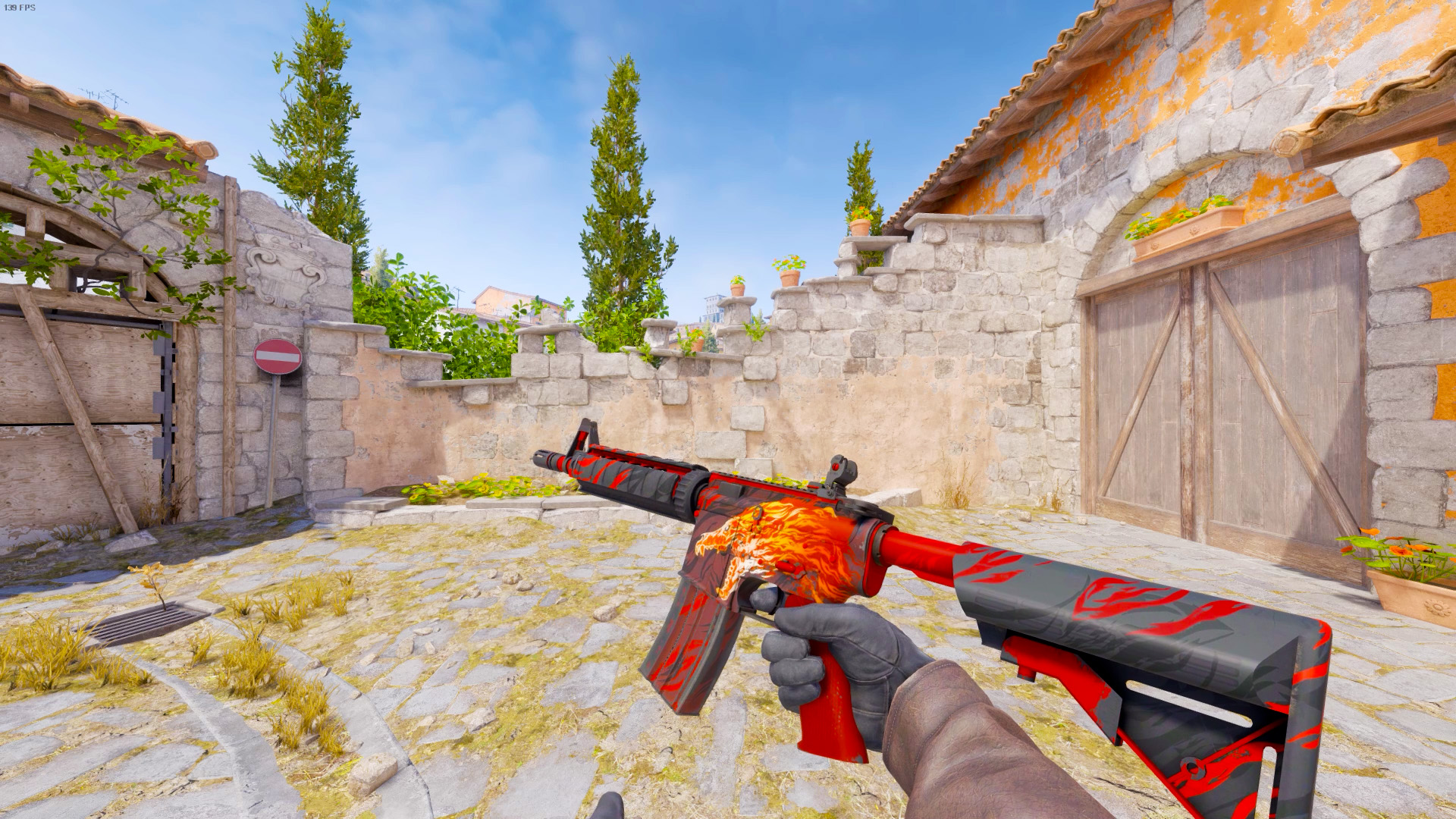
The M4A4 | Howl entered CS:GO like any other weapon skin — through the community Workshop, submitted by two creators, and quickly added to a case. But what followed was something no one expected: stolen artwork, a legal takedown, and a total rework by Valve that gave birth to the only Contraband item in the game.
Birth of the Beast – How It All Began
Back in early 2014, Valve was regularly adding new skins to CS:GO through the Steam Workshop, a community-powered system where players could submit custom weapon finishes. It was a way to give creative players a shot at getting their designs into the game. Some submissions were good. Others were forgettable. But one stood out.
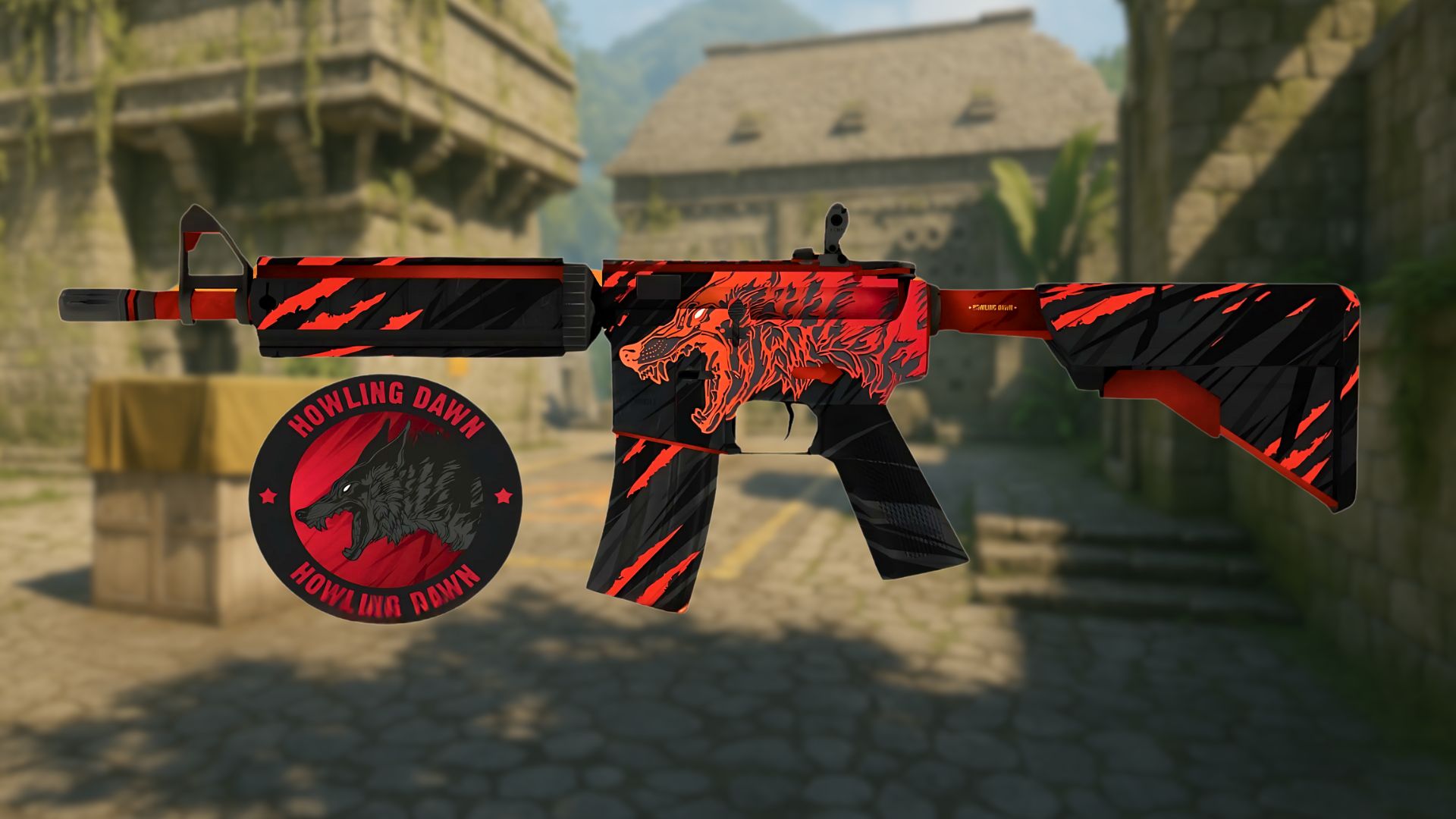
Two Workshop users, going by the names sic and Ted, submitted a design called Howling Dawn. It featured a snarling red wolf head bursting through black flames, painted across an M4A4 rifle.
Valve liked what they saw.
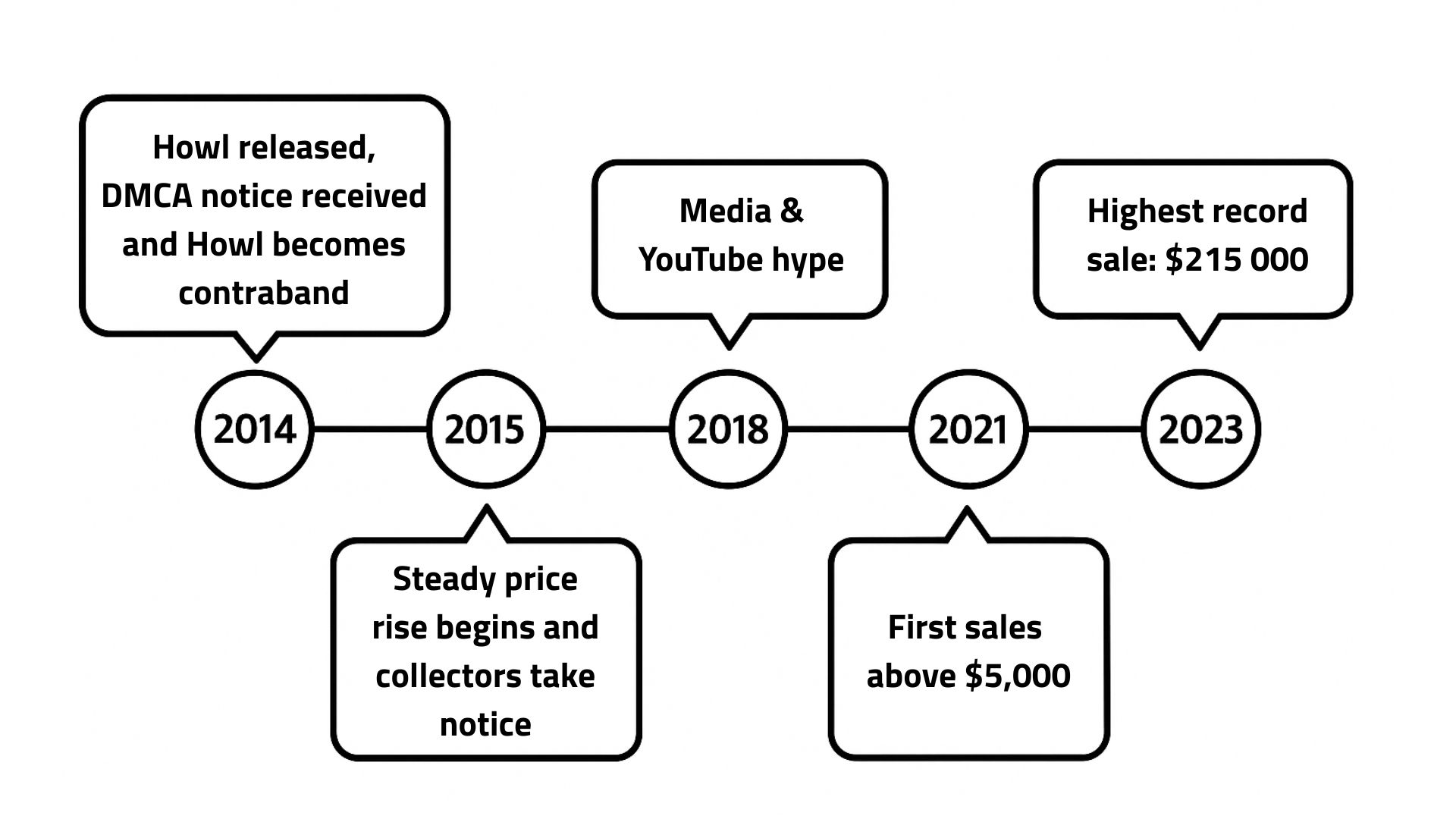
On May 1, 2014, the M4A4 | Howl was officially added to the game as part of the Huntsman Weapon Case. It dropped as a high-tier Covert skin — bright red rarity, meaning hard to get and immediately valuable. Players loved it. It was flashy, fierce, and felt like a prize.
But things were about to change quickly.
Stolen Identity – The DMCA That Changed Everything
Just a few weeks after the Howl hit the game, everything unraveled.
Players noticed that the skin’s artwork wasn’t exactly original. In fact, it was taken directly from a piece posted years earlier on the online art gallery DeviantArt by an artist named CanisAlbus, who had no connection to CS:GO or the Workshop.
This wasn’t just a lazy trace or a “heavily inspired” design. It was a straight-up copy. And once the artist became aware, Valve received a DMCA takedown notice, forcing them to take action.
In a public response, Valve explained the situation clearly and seriously.
They confirmed that the M4A4 | Howl and the Howling Dawn sticker had both been submitted with plagiarized artwork. The two contributors involved were Steam-banned, permanently cut off from any future revenue, and all of their other submissions were removed from the game.
Valve also explained how the Workshop works:
- Artists sign a legal agreement saying their content is original.
- Valve doesn’t manually vet every submission — instead, the community helps flag problems.
- If a submission turns out to be stolen, all contributors involved share the blame and consequences.
So, what did Valve do about the Howl?
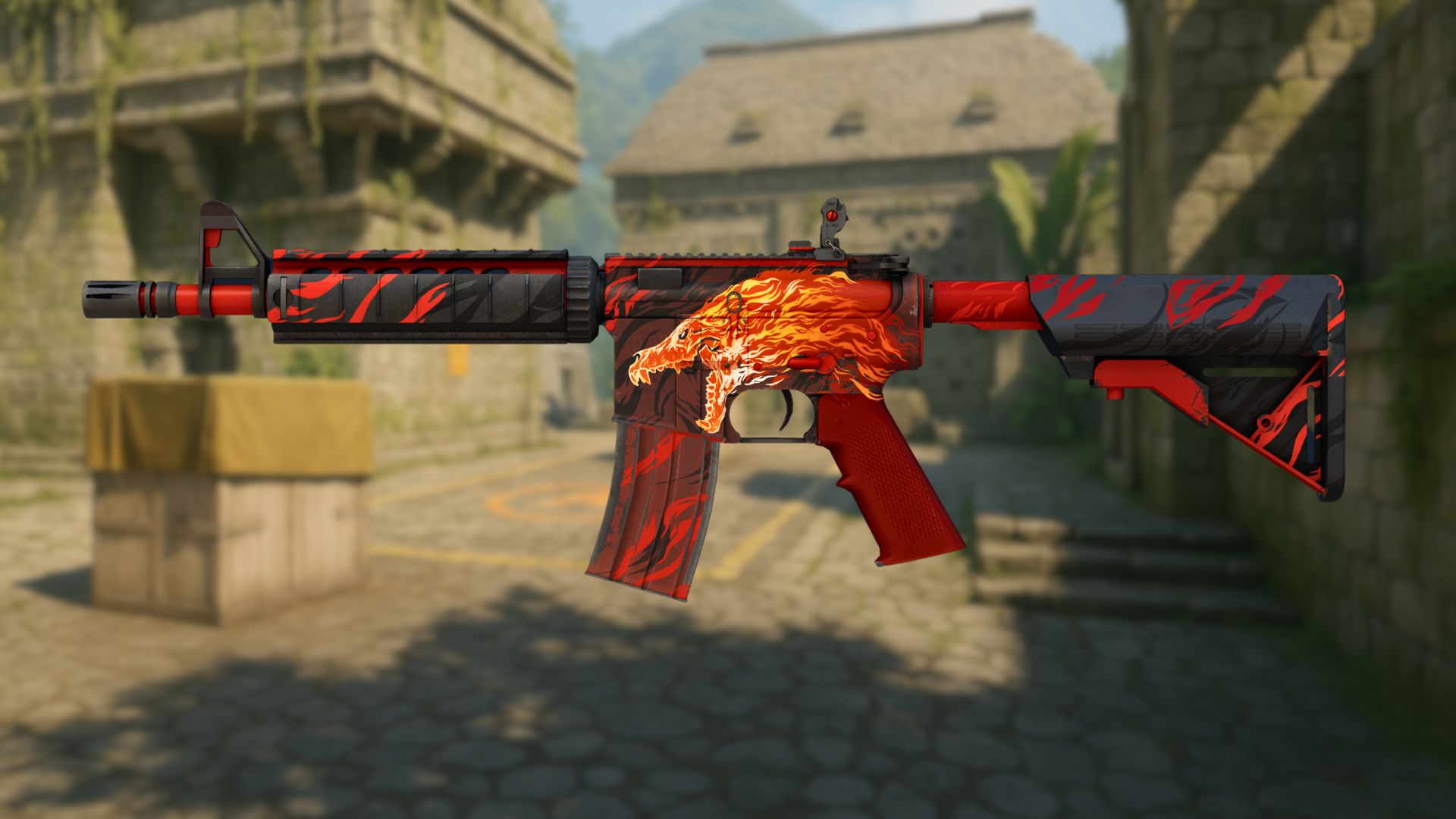
They didn’t just delete it. Instead, they replaced the artwork with a brand-new design created by the CS:GO dev team and pushed an update on June 11, 2014. The new Howl kept the name and slot, but was now original artwork — no longer tied to any of the banned creators.
At the same time, it was reclassified as Contraband, a brand-new rarity tier created specifically for this skin, marking it as completely unique.
The community was stunned. A skin had just been banned, repainted, and reclassified. Nothing like it had happened before — and it hasn’t happened since.
The Contraband Curse – A New Rarity Was Born
When Valve removed the Howl from cases, they couldn’t just delete it. Thousands of players already owned one, and wiping it from inventories would’ve created an even bigger mess. So instead, Valve invented a brand-new rarity tier, one that had never existed in the game before — Contraband.
To this day, Contraband is a one-off classification. It’s not red like Covert skins, not gold like knives — it’s orange, and it was made just for the M4A4 | Howl. No skin has ever joined it.
From that point on, the only way to get a Howl was to trade for one, and that made the limited supply instantly more valuable. Players who already had one suddenly found themselves holding a skin that shifted from a standard case drop item to a skin with a fixed, finite supply.
The decision to rework and reclassify the Howl didn’t just resolve a copyright issue — it marked the beginning of something much bigger. What could have been a short-lived scandal ended up creating the rarest skin in the game’s history.
With no way to unbox it ever again, and a brand-new rarity tier made just for it, the Howl instantly became a collector’s item — a turning point in the CS skin economy that continues to shape the market today.
Legacy of Scarcity: Price, Rarity, and Trading Culture
Since the Howl was locked away in 2014, no new ones have ever entered circulation. That alone gives it a kind of digital aura — it’s part of a closed group of items with a truly finite supply, something incredibly rare in a game where most skins are constantly reappearing through cases and trade-ups.
Because of that, demand has never really cooled off. It’s only grown as the player base has expanded and more collectors and investors have entered the scene. Prices reflect that. Factory New versions regularly sell for several thousand dollars, and StatTrak variants — especially with low float values — can fetch tens of thousands.
A Record-Breaking Sale: $215,000 for One Howl
In April 2023, one of the most valuable Howls ever sold changed hands in a private auction — a Factory New M4A4 | Howl with four iBUYPOWER Holo stickers from Katowice 2014 was sold for $215,000. The sale was confirmed by high-profile trader zipeL on Twitter, who described the deal as “undersold”, suggesting the skin might have fetched even more.
This wasn’t just a flex or a rich collector’s whim — it was a milestone. It proved that rare combinations of float, skin, and stickers could push CS:GO items into high-end luxury territory.
Trading Culture – Skins as Status, Investment, Identity
The Howl isn’t just valuable because it’s rare — it’s valuable because of what it represents. Over time, it’s become more than a digital item; it’s part of a broader trading culture that treats skins as collectibles, assets, and sometimes even symbols of identity.
Because the Howl can’t be listed on the Steam Market, buying or selling one involves third-party marketplaces or direct trades between trusted collectors. That in itself makes the skin feel more exclusive, like it exists slightly outside the system.
Some players stash their Howl away in storage, waiting for the market to rise, treating it as a long-term investment. Others show it off in-game like a status symbol.
The Legacy and Lasting Impact of the Howl
The M4A4 Howl shouldn’t even exist — and maybe that’s exactly what makes it unforgettable.
What started as a community skin submission ended up in legal trouble and somehow came out the other side as the most iconic skin in Counter-Strike history. Valve’s response to the copyright violation didn’t just create a new artwork — it created an entirely new rarity tier, rewrote the rules for skin submissions, and permanently changed how the community thinks about digital ownership.
The Howl’s influence went beyond the skin itself. It made Valve more cautious about what they accept into the Workshop. It pushed artists to take originality seriously. And it made players, collectors, and traders more aware of the real-world value behind virtual designs.
Today, the Howl is more than just rare or expensive. It’s a digital relic — a symbol of how a single mistake turned into a cultural milestone. In a game filled with thousands of skins, it’s the ones with a story that truly stand out.